Showing posts with label reading lists. Show all posts

Thursday, December 29, 2011

The Pleasures of Reading, Viewing, and Listening in 2011, part 21: Cat Rambo

Best of 2011
by Cat Rambo

2011 was a rich year for speculative fiction for me. Like most of my friends, I was eagerly awaiting both the HBO version of Game of Thrones and the latest installment in George R.R. Martin’s series, Dance With Dragons. I enjoyed them both (and discovered a subplot in GoT that I’d apparently missed in the book), but wish DwD had had more to it. There are characters I’m dying to see again who are tucked away in what’s still to be written, apparently. Speaking of other big fat fantasy books, Pat Rothfuss’s The Wise Man’s Fear, sequel to The Name of the Wind, finally appeared and was close to the quality of the first one, though I’m not sure about that section in another dimension. I also loved Sam Sykes' Tome of the Undergates and Black Halo, which were everything modern day sword and sorcery should be and never hit a sour note.

I love spec fic that thinks about gender roles, and was lucky enough to get an advance read of Kelly Jenning’s Broken Slate from Crossed Genres Press this year, a far future story of a male slave which explores power and class dynamics. 2011 was a great year to find GLBT characters and two joined my list of all-time favorites. One, a transgendered courtesan, appears in Amanda Downum’s The Drowning City and The Bone Palace. Downum’s writing reminds me of what I like about authors like Martha Wells and P.C. Hodgell - vivid and interesting, beautifully drawn worlds, including cities that feel drawn with the obsessive eye of a DM, down to the last street. The other character, Chess Pargeter, comes from Gemma Files’ Hexslinger series, so far consisting of A Book of Tongues and A Rope of Thorns, which is a wow of a fantasy western world.

I also got an advance read of Elwin Cotman’s The Jack Daniel Sessions EP. I loved these stories, both Cotman’s more contemporary pieces as well as the ones that go back and take looks at more traditional pieces, both celebrating and making new things of them. In blurbing the book, I said, “In The Jack Daniels Sessions, folktales and modern landscapes collide, exploding and reforming in the form of an intriguing and intelligent collection. Cotman seizes the stories of tired tradition and galvanizes them, setting them to dance for us in wonderful, new interpretations.”

More traditional fare appeared in the form of Galen Beckett’s The Magicians and Mrs Quent and its sequel The House on Durrow Street. While the books have a definite Jane Eyre vibe, they’ve also got a world of odd time cycles and magical possibilities that is intriguingly, sparsely explained. Of the various steampunk books, I particularly enjoyed Lavie Tidhar’s The Bookman, The Doomsday Vault by Steven Harper and Cassandra Clare’s YA Clockwork Angel. I read a lot of urban fantasy, and found books that I liked this year included a fine romp titled Under Attack by Hannah Jayne, everything I found by Kate Griffin (The Midnight Mayor, A Madness of Angels, and The Neon Court), and the latest in Kim Harrison’s Hollows series as well as Richard Kadrey’s Sandman Slim series. I was delighted to find that Tim Pratt has released a number of Marla Mason pieces on his own in e-book form, since she’s one of my favorite modern-day magic wielders.

This summer, Minister Faust read from The Alchemists of Kush and I was lucky enough to have him read the section I’d just finished. The book’s terrific, and Faust is an amazing reader. Clarion West brought him along with a slew of other instructors, and my other favorite was Margo Lanagan, who apparently I’d managed to miss until that point. Holy moly was she a good reader! Plus such a lovely voice. I bought Tender Morsels immediately.

I read a LOT of stories in 2011 and should have tracked them better. Several that stood out were: Charlie Jane Anders’ Six Months, Three Days (http://www.tor.com/stories/2011/06/six-months-three-days); Nancy Fulda’s “Movement”, Genevieve Valentine’s “Demons, Your Body, and You”
http://subterraneanpress.com/index.php/magazine/summer-2011/fiction-demons-your-body-and-you-by-genevieve-valentine/ (which appeared in the terrific Subterranean Press Summer 2011 issue edited by Gwenda Bond - http://subterraneanpress.com/index.php/magazine/summer-2011/introduction-by-gwenda-bond/); Lily Yu’s “The Cartographer Wasps and the Anarchist Bees,” (http://clarkesworldmagazine.com/yu_04_11/)

I was sorry to see spec fic magazine Crossed Genres go, but I’ve been enjoying the success of Daily Science Fiction, which is really publishing some strong stuff. Beneath Ceaseless Skies also continues to knock it out of the ball park on occasion. 2011 also saw Realms of Fantasy go under for the third and final time, as well as the announcement of Fantasy Magazine and Lightspeed’s new owner John Joseph Adams and his plans to merge the magazines, which looks like it will continue to publish some great stuff (disclaimer: every magazine mentioned has published my work, so I am biased.)

2011 started with a strong movie, The King’s Speech, and also held several superhero movies that were big and silly and full of spectacle: Thor, Green Lantern, and X-Men: First Class. But my favorite of the year was Rise of the Planet of the Apes, which had some problematic aspects, but crafted the lead up to the final battle so well that you rooted so solidly and satisfactorily for the apes that I’d go see it again, anytime. TV was the usual crap (and I happily watch that as much as anyone, but I refuse to celebrate it) but I did really, really enjoy the BBC modern Holmes series, Sherlock, which celebrates and updates the traditions of the series in a loving, meticulous way and which any Holmes fan will adore.

Game-wise, there was nothing more outstanding than Skyrim, which looks to carry me into 2012 as well. I’d been very hopeful about the new Civ release, but in looking at it, I felt like they’d taken away the parts I liked the best and dumbed down the rest. World of Warcraft certainly took its share of time, but it’s grown less appealing somehow, perhaps because the gender stuff in Skyrim is a little less...I dunno, full of ass-slapping succubi. Go figure.


Cat Rambo writes and teaches in the Pacific Northwest in the wilds of Redmond. Her collection Eyes Like Sky and Coal and Moonlight was a 2010 Endeavour Award finalist, and her work has appeared such places as Asimov's, Tor.com, and Weird Tales. Her website can be found at http://www.kittywumpus.net

The Pleasures of Reading, Viewing, and Listening in 2011, part 20: Kate Schaefer

Books and Television I Enjoyed in 2011
by Kate Schaefer

Books I particularly enjoyed in 2011:

Joanna Russ, How to Suppress Women’s Writing - re-read in grief after Joanna’s death, in fierce joy at her words. I’m grateful to get mad all over again as she reminds me of all the ingenious ways in which women’s writing is suppressed, minimized, and forgotten. I’ll always remember her writing, as long as always lasts for me.

Margo Lanagan, Tender Morsels - read for the first time just before Margo taught at Clarion West, shared with a granddaughter who wants happy endings for everyone, even for the bad guys. Sometimes especially for the bad guys; she feels sorry for them and wants them to be redeemed. I know more things happened to those people after the book ended, she said.

Ysabeau Wilce, Flora Segunda and Flora’s Dare - re-read, and again shared with that granddaughter, who was indignant that the third volume isn’t out yet.

Paul Park, Soldiers of Paradise, Sugar Rain, The Cult of Loving Kindness, A Princess of Roumania, The Tourmaline, The White Tyger, The Hidden World - much of this Park orgy was re-reading, but I hadn’t ever finished the Roumania quadratic equation before this summer. Damn, that man writes good.

Cat Rambo, Eyes Like Smoke and Coal and Moonlight- collected short stories; I’ve been a sucker for Cat’s stories since the first time I read “The Dead Girl’s Wedding March.” I’m a sucker for her titles, too.

Nisi Shawl and Cynthia Ward, Writing the Other - another re-read. I’m not writing the other, myself, but I’m constantly reading the other. This little book has much useful info packed into it.

Michael Swanwick, Stations of the Tides, Vacuum Flowers, The Iron Dragon’s Daughter, The Dragons of Babel - all re-reading except The Dragons of Babel, which I’d been saving until the ink didn’t smell so new. The two older books made me so happy that I wrote Michael a fan letter thanking him for writing them. We should all thank authors we like from time to time; it encourages them even more than buying their books.

N. K. Jemisin, The Hundred Thousand Kingdoms - the newest book I read all year; I look forward to reading lots more of Nora’s work.

Television I enjoyed in 2011:

Buffy the Vampire Slayer - Joanna Russ used to say, If you don’t watch television, you’re out of touch with popular culture, and you don’t understand the society you live in. She was shocked and appalled that I didn’t have a television; she scorned my intellectual snobbery toward TV. In later years, I was taken aback that she was a rabid fan of Buffy the Vampire Slayer. Now that I have a television and am watching old shows via DVDs borrowed from the library, I know what she was on about. Buffy is brilliantly written and well worth watching, though I’m still only partway through the first season. All of you people who are in better touch with popular culture, you can scorn me now.

Xam’d: Lost Memories – one of the best anime series I’ve ever watched; well-written, beautifully drawn and animated. The opening sequence alone is a lovely set of meanings conveyed through characters’ glances and gestures, an abbreviated ballet.

Princess Tutu – anime for small children, about a girl who is really a duck and also has a secret identity as a magical ballerina who fights evil and saves a handsome prince. It’s astonishingly good. Uses lots of classic ballet music and breaks the fourth wall to great effect. Ballet fight sequences refer to the swordfighting sequences in Revolutionary Girl Utena; those references should have gone over the heads of the intended original audience, but undoubtedly kept the show’s creators entertained.

Revolutionary Girl Utena – weirdest damn anime I’ve ever watched, and definitely not for small children. I’ve watched this series three times now, and I’m still not sure what happens in it. It’s about religion, power, manipulation, cliques, sex, abuse of all sorts, student councils, incest, cows, and the power to bring about world revolution. It has the most powerful use of repetitive, static animation I’ve ever seen, with bonus Indonesian shadow puppet characters acting as a chorus in every episode.

Kate Schaefer previously worked in a lumberyard, wrote budgets for a no-longer-extant bank, researched quotations for one of Ronald Reagan's speechwriters, wrote code that ran on mainframe computers, won awards for Latin oratory, served on the Clarion West board of directors, chaired the
Tiptree jury in 1998. Now she makes cocktail hats, lifts weights, raises money for writers, votes Democratic, remembers very little Latin and hardly any JCL.

Tuesday, December 27, 2011

The Pleasures of Reading, Viewing, and Listening in 2011, part 19: Cynthia Ward

2011 in Review: Stories in the Key of E
by Cynthia Ward

In our household, 2011 is the year of the e'reader, since I received a Nook Color and my partner gained a Kindle late last year. I hadn't thought reading on an electronic device would be an easy adaptation, but our reading quickly became almost exclusively e'reading. Now I find myself wondering if I'm spending my reading time downloading free e'books and e'samples instead of, you know. Reading.

Gods and Atheists (Music, Television, and Film)

In music, the year got off to a bad start with the death of Kate McGarrigle (http://en.wikipedia.org/wiki/Kate_McGarrigle), untimely torn from the world by cancer. I suppose she's better known nowadays as the mother of singers Martha Wainwright and Rufus Wainwright, but I first made her musical acquaintance in the early '80s, when I heard the second album (Dancer With Bruised Knees, 1977, http://www.amazon.com/Dancer-Bruised-Knees-Kate-Mcgarrigle/dp/B00000063O/ref=sr_1_1?s=music&ie=UTF8&qid=1323818655&sr=1-1) by the eclectic French-Canadian folk-rock sister duo of Kate and Anna McGarrigle. I hesitated to type "the eclectic French-Canadian folk-rock sister duo," because, if you haven't heard them, the phrase reduces them to a misleading image or soundbyte in your head, and gives no idea at all of their glory. But a trip to YouTube will fix that problem (http://www.youtube.com/results?search_query=kate+and+anna+mcgarrigle&oq=kate+and+anna&aq=0&aqi=g10&aql=&gs_sm=e&gs_upl=33l2163l0l4601l13l12l0l3l3l0l243l1183l5.2.2l9l0).

With television I remain 99% unacquainted. Still, I've seen the first season of the highly regarded apocalyptic series, The Walking Dead (http://www.youtube.com/watch?v=R1v0uFms68U&ob=av3e). Meh. I wouldn't say the show operates on the low level of the idiot plot, but too many characters who ought to know better (like, oh, the trained law enforcement officers) do a lousy job of grasping the seriousness of their situation (it's the zombiepocalypse, people! look alive!). Another annoyance is that the show, initially diverse, has whittled away most of the minority characters, with the lone black woman killed off in an especially troubling manner. I can't help wondering if a big part of the show's appeal lies in finding a way to justify brutal violence ('cas surely no one's going to object if you blow the brains out of a mindless, insatiably hungry ambulatory corpse, or beat the blood out of a wife-beater).

I've probably seen most episodes of the new sitcom, 2 Broke Girls (http://www.youtube.com/watch?v=hr3FXTioTIo), which joins the proud tradition of what a friend calls depression-era comedy (cf. Blondie and The Honeymooners, though technically the latter wouldn't qualify). I hadn't realized TV sitcoms had gotten so comfortable with vibrator references and lesbian overtones ("I never thought waking up in bed with another girl and frosting on my boobs would be this depressing"). These het girls almost manage more shared sack time than the characters of The L Word, but no doubt this teasing will lead nowhere. The show's treatment of minority characters will probably infuriate, but, like South Park, 2 Broke Girls seems to scorn everyone else, as well. Now, I suspect an actual old-money Wharton grad would not find herself in this situation, even with a Bernie Madoff clone as her dad. But the main characters have great chemistry, and there are many good lines. I don't think I'd want to find myself on the cutting edge of Max's wit.

In film, the year must have been a high-water mark for good superhero movies, judging by Captain America, Thor, and X-Men: First Class (I didn't see Green Lantern or the Green Hornet remake, however). Putting a swinging-'60s spy-fi spin on the popular Marvel Comics franchise, X-Men: First Class gains points for a gay subtext that strains so vigorously against the text, it nearly bursts the zipper (https://blogger.googleusercontent.com/img/b/R29vZ2xl/AVvXsEiO-68bXN4vFy1OqNuZe0N8vVIKXjbJCaySxofhMBu6y0xT1PYtQP24tUIQW02n_vBKyJZKFbtV2w-wE7CLhHGht4Uw97UmDusi_6XO14LlSrP-3GH64dRbhj4sU-O0utlFAsqvGyZGcLE/s1600/X-Men+First+Class.jpg); but it loses points for racefail. Set mostly during World War II, Captain America is good, clean, dieselpunk'd fantasy fun. Meanwhile, Thor is a little less well written, but still strong. Chris Hemsworth wrung every ounce of nuance he could from a part offering little opportunity for it. And, though the Nordic type isn't usually my thing, his uber-buff portrayal of Marvel's reboot of the Scandinavian myth had this atheist thinking, "Maybe there is a god (http://www.celebuzz.com/2011-05-03/shirtless-chris-hemsworth-all-the-reason-you-need-to-see-thor-photos/)."

So we come 'round to Bill Maher's purportedly atheist movie, Religulous (http://www.youtube.com/watch?v=S5yJ2qUyxCk), released in 2008 but not seen by our household until this week. Actually, Religulous is better described as anti-religious, which, of course, is a position the agnostic and the person of faith can also take. In his satirical approach, Maher generally picks only the low-hanging fruit. Religulous reminds me of nothing so much as those newspaper articles about science fiction conventions, in which the reporter interviews an 800-lb. fan with visible B.O. and a Spock costume (complete to surgically altered ears), then implies that everyone at a con is like this. Had Maher done more than just punch a straw man, the movie would have been a lot more interesting. And valid.

We also enjoyed Breaking Dawn: Part 1, which is the latest of the Twilight Saga movie adaptations, and the best since the first. I admit the series should make my feminist head explode, but it's such a fascinating exploration of a severely fucked-up relationship...which I would not be surprised to learn Stephenie Meyer knows, seeing as her characters are familiar with Romeo and Juliet and Wuthering Heights. And is it just me, or does a disturbing percentage of the criticism of the Twilight Saga boil down to "She wrote it but she shouldn't have. She wrote it but look at what she wrote about. She wrote it but she isn't really an artist, and it isn't really art"?

Other movies I saw this year include: Astroboy (much better than I expected -and how did they get the movie greenlighted when they kill the main character, a little boy, in the first few minutes?); Contagion (scientifically accurate insofar as this non-scientist can tell, and therefore all the more terrifying); Presumed Innocent (a good adaptation of one of the finest suspense novels ever written); its sequel, Innocent (an okay adaptation of the Presumed Innocent sequel, which I haven't read); the True Grit remake (uneven, but young actress Hailee Steinfeld is a marvel http://www.youtube.com/watch?v=5GkAH7IUWOE&feature=relmfu); the riveting and disturbing Let the Right One In (which might be described as a vampire film by Ingmar Bergman); a wildly incoherent yet still wondrous Hong Kong wuxia heroic fantasy movie, Dragon Inn (variant title, New Dragon Gate Inn, 1992 http://www.youtube.com/watch?v=oVsqB22CQ2I), starring Brigitte Lin as a cross-dressing warrior woman and Maggie Cheung as an inn owner whose sidelines include killing and robbing guests and serving their artfully disguised remains to her clientele; and a pair of great Colin Firth films, A Single Man (whose ending irritates, though I suspect it's true to the Christopher Isherwood novel from which it is adapted) and The King's Speech (which made me care deeply about the titular character, when usually I find the travails of royalty to be of zero interest).

Movies I hope soon to see include Conan the Barbarian; Immortals; and the American reboot of the Swedish film adaptation of The Girl With the Dragon Tattoo (http://www.youtube.com/watch?v=WVLvMg62RPA).


We Gonna Rock Down to Electric Avenue (Fiction)

Despite all the time spent downloading, I read a fair bit (many more books than I'm going to try to discuss here). Perhaps ironically, my e'reads included a number of steampunk works: K.W. Jeter's early novel, the uneven but interesting mashup Morlocks (1979); Jeter's later and stronger alt.Victorian romp, Infernal Devices (1987); Leanna Renee Hieber's unusual The Strangely Beautiful Tale of Miss Percy Parker, which might best be described as a romantic emo supergroup gaslight-fantasy novel; Lavie Tidhar's careening Camera Obscura, which folds wuxia and blaxploitation into its multi-culti League of Extraordinary Gentlemen-style mashup; and Lionel Bramble's pair of delightful spy-fi steampunk adventures: "The Beast in the Machine" and 1901: A Steam Odyssey, which push both the League-style mashup and the erotic-fiction genre into strange, sometimes disturbing places -with the author having fun all the way.

I've just finished Thomas Marcinko's excellent new e'book collection, Astronauts and Heretics, which assembles several of his stories, all displaying his distinctly offkilter, sometimes acerbic, oft amusing Swift-via-Galaxy sensibilities. I'm not going to ruin your fun by describing all the stories, but "Whiter Teeth, Fresher Breath" is representative, with a science-fictional spin on the singles scene that I am sure no one else could ever have thought up.

Earlier this year, in anticipation of John Carter, the forthcoming movie adaptation of Edgar Rice Burroughs's Martian series, I read the first three novels. I was flinching in expectation of finding the first Barsoom novel, A Princess of Mars (1917), so racist, sexist, and colonialist that I'd throw it across the room, e'reader and all; but I discovered that ERB was struggling with the racial attitudes of his time (his heroic race of Martian "red men" is explicitly described as mixed race, while his white Martians are corrupt, decadent, and supremely manipulative). Ultimately, I'd say ERB lost the struggle with Edwardian attitudes, but I was encouraged enough to revisit Tarzan of the Apes, another favorite in the Golden Age of Science Fiction (i.e., when I was fourteen). It proved even more mixed in its attitudes than the Martian books, shall we say.

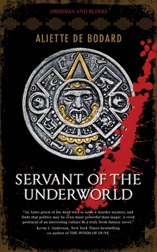
The first and second novels in new writer Aliette de Bodard's "Obsidian and Blood" series -Servant of the Underworld and Harbinger of the Storm -may both be characterized by my description of the first in Weird Tales: "Writing skillfully in a language not her first, [de Bodard] deftly combines a complex murder mystery that 'plays fair,' with a dark historical fantasy that is saturated in the supernatural and set in fifteenth-century Mexico." If you can handle the Aztecs' propensity for frequent sacrifice to appease their blood-thirsty gods, both books are well worth reading. I'm looking forward to the third in the series, Master of the House of Darts.

I also read Suzanne Collins's justly acclaimed novel, The Hunger Games (http://www.youtube.com/watch?v=eAWODq_dMFI). This post-apocalyptic YA SF work can be read as a response to the Twilight Saga (Collins's female protagonist hardly sits around waiting for a man to save her); but of course there's far more going on than that. I don't think I've ever read a novel for which my teenaged self would've had such a sharply divergent reading from that of my grizzled current self (young me: escapist power-fantasy adventure a la ERB and Robert E. Howard; middle-aged me: sharply pointed, deeply sad critique of contemporary U.S. culture). I hope soon to read the trilogy's remaining books, Catching Fire and Mockingjay.

Other books I'll be reading in the near future include Leanna Renee Hieber's The Darkly Luminous Fight for Persephone Parker; Danya Ingram's Eat Your Heart Out; Janni Lee Simner's Faerie Winter; Milton Davis's anthology Griots: A Sword and Soul Anthology; Amal El-Mohtar's The Honey Mouth; JoSelle Vanderhooft and Steve Berman's anthology Heiresses of Russ 2011: The Best Lesbian Speculative Fiction of the Year; Carole McDonnell's Spirit Fruit: Collected Speculative Fiction; and Nisi Shawl's second collection, Something More and More, and the nonfiction anthology she edited, The Wiscon Chronicles: Volume 5: Writing and Racial Identity.


Cynthia Ward (http://www.cynthiaward.com) lives in the Los Angeles area. Her most recent fiction may be found in Pirates and Swashbucklers (Pulp Empire), edited by Nicholas Ahlheim; Tales From the Den: Wild and Weird Stories for Bears (Bear Bones Books/Lethe Press), edited by R. Jackson; and Triangulation: Last Contact (Parsec Ink), edited by Steve Ramey and Jamie Lackey. With Nisi Shawl, Cynthia coauthored Writing the Other: A Practical Approach (Aqueduct Press), which is now available as an e'book.

Saturday, December 24, 2011

The Pleasures of Reading, Viewing, and Listening in 2011, part 18: Kiini Ibura Salaam

The Pleasures of Reading, Viewing, and Listening in 2011
by Kiini Ibura Salaam


I must confess, the dizzying logistics of everyday life claim dominion over so many of my overused brain cells that sometimes the pleasure zones of my brain lie fallow for far to long. And when they light up, the pleasures that triggered the brain activity are quickly forgotten, swallowed by the next days responsibilities—the household duties, the transportation necessities, the meal preparations, the workday intrigues and deadlines, the surviving.

I cannot pride myself on living well if I am only surviving—and finding pleasures is a central aspect of thriving. Even in a year that included no international travel—gasp!—I am happy to say that I did experience some pleasures that tickled my imagination, satiated my need to revel in beauty, allowed me to marvel in the endlessly inventive ways that we humans are creative, or gifted me with the opportunity to wet my face with tears sparked by witnessing resilience and resistance.

So I will take you through a year of pleasures—not necessarily the year’s best, but those that I remember fondly as I lay down another brick in this road I’m paving through life.


January: The Love Art Lab

I was first introduced to Annie Sprinkle over a decade ago when I picked up one of her books at a friend’s house. For all of Annie’s adult life, sex has been her milieu—it has served as her career, her muse, her source of healing, and her field of study. I remember being struck by her sex-positive history of being a prostitute, saying she was working in a massage parlor and having sex with clients, thinking that she was the luckiest massage therapist in town. It took her some time to realize that she was a prostitute, and her clients weren’t paying her for her massage. http://anniesprinkle.org/about-annie/the-sprinkle-story/

In the coming years, I came across bizarre and intriguing performance art pieces:
• Coco Fusco and Guillermo Gomez-Peña presenting themselves as newly-discovered Amerindians and travelling the world to display themselves in a cage.
http://www.thing.net/~cocofusco/subpages/videos/subpages/couple/couple.html

• The destructive and demanding works of Tehching Hsieh which included punching in on a time-clock every hour for an entire year and spending a year tethered to a woman (performance artist Linda Montano) by a rope.
http://www.nytimes.com/slideshow/2009/03/01/arts/20090301_HSIEH_SLIDESHOW_index.html

I am intrigued when people are pulled to do something out of the ordinary—bizarre by normal standards, but somehow just right to fulfill whatever internal conversations they are engaged in.

So I was tickled pink when I discovered the Love Art Lab, www.loveartlab.com. Annie Sprinkle, now a mature woman and partnered with Dr. Elizabeth Stephens, created a seven-year project exploring love with her partner. Unable to be legally married at the beginning of the project, Sprinkle and Stephens decided to have a marriage every year for seven years, and in so doing explore the nature of love. Each year was guided by one of the seven chakras. The weddings were large public affairs, celebrations of love, sexuality, and life. It reminded me a bit of parties I fantasized about throwing in my childhood: everyone will dress up and wear the same color and eat oranges! Each wedding seemed like a sublime celebration of life. Would you ever dare to raise such a ruckus in celebration of anything?


February: RETNA Art Exhibition

In February, I accepted a friend’s invitation to head out on a weeknight. We were going to an exposition by the artist RETNA. She was intrigued by his large-scale murals, most of which included beautifully rendered portraits of women. http://english.mashkulture.net/tag/retna/ When we got there, the art was completely different from what she expected. The exposition was held in a massive warehouse, so far away from the normal flow of things we had to assure our cab driver repeatedly that we had the right address. The walls were covered with humongous canvases, most of them black, covered with curling, complex lines. http://www.digitalretna.com/. Were they images? Were they letters of an unknown language? It almost seemed as if I should read the canvases, that perhaps they contained some ancient message that could help me in the future.

It reminded me immediately of something called asemic writing. A term that means writing that has no message content, but retains the emotional messaging that only writing made with a human hand can muster. http://www.asemic.net/ What was clear was that the artist had committed so much time to quieting his brain so that his hand may speak, that he could now enter into a space of deep communing with his work at will—to the point where he could cover in infinite number of canvases (and airplanes and buildings, I later discovered), with the same nuanced, graphic, graceful script. Surrounded by the fruits of his flow, I was intrigued, enthralled, and ultimately inspired to go home and let my hand dance across a canvas too.


March: Meklit Hadero, Leaving Soon

My father has a wonderful music site called Breath of Life that has taught me so much about music. Through his site, I’ve learned more about established musicians and been introduced to new artists. Listening the jukebox on his website, I was introduced to this enchanting song by Meklit Hadero that I listened to repeatedly after my first listen. http://www.youtube.com/watch?v=sfB3rnaa5hE

I love creativity and hearing someone’s authentic voice come through whatever art form they engage in. I find this song to be both beautiful, in the flow of established music forms, and also completely original and unique to Meklit. Here is my father’s write up on Meklit:
http://www.kalamu.com/bol/?http://www.kalamu.com/bol/2011/03/16/meklit-hadero-“meklit-hadero-mixtape”/


April: Revisiting Jennifer Holiday, “And I Am Telling You”

We live in a world of remakes and do-overs, when classics are done over again, and then again. I—being a person of great calm and subdued emotional expression—am always fascinated when someone has access to emotions in performance, then top it off with a god-given talent, well it gives one pause. At about 3:30 minutes into this scene from the original Dreamgirls stage play, Jennifer Holiday rolls into “And I Am Telling You.” The power of her voice alone can shake you to your soul, but the all-out gusto she puts into her performance is so intense it’s almost shocking. Is it over the top? Certainly, but it’s also spellbinding. Her own personal emotional marathon of pleading and pain, raw emotion vocalized with gut-bucket desperation. Just when you think she’s already left it all on the floor, she puts more hunger and terror into the performance. It is confounding, exciting, and astounding to witness. http://www.youtube.com/watch?v=rtnKI3ztz9w

May: JR, a bridge for change
TED Prize Speech
http://www.hulu.com/watch/221157/tedtalks-jrs-ted-prize-wish-use-art-to-turn-the-world-inside-out

In this TED Prize speech, JR—a former graffiti artist who is now a photographer—walks viewers through his development as an artist. He talks about how art carried him into a new area of artmaking and into new worlds. He travels the globe making larger-than-life size portraits and plasters them to walls all over the world. He photographs people who live in the shadow of poverty, neglect, or conflict to trigger communication and connection. He’s photographed the children of immigrants (his peers) after major class-based riots in France, residents of a favela in Brazil and a slum in Kenya, and people on both sides of the Isreal-Palestine conflict. In Brazil, the media was forced to seek out a people they traditional ignored to interview them about his project. In Isreal and Palestine conversations across the political border were sparked. His project in Nairobi caused one onlooker to explain to another: "You have been here for a few hours, you've been trying to understand the art, discussing with your fellows. In that time, you haven't thought about what you are going to eat tomorrow. That's art."

June: Jose James @ Weeksville Heritage Center

For me, one of the most pleasurable parts of living in New York is the summertime, especially the outdoor music festivals happening all over the city. There are always great concerts in Central Park and Brooklyn’s Prospect. But there are also smaller scale venues like the Weeksville Heritage Center. http://www.weeksvillesociety.org/

Weeksville is the site of a free black community where three of the community’s original homes have been preserved and the organization is building a multimedia arts center on the site. Each summer they have an intimate concert on their grounds. This summer I was treated to Jose James, a young jazz singer who has received nods and accolades from established jazz musicians for working in the old tradition. I appreciated his recorded music, but seeing him live took my appreciation into another stratosphere. His love for the music was clear, the ease with which his gorgeous voice slipped out was enchanting. He took us on a melodic journey through jazz both traditional and modern. It was a highlight of my summer.

July: Amy Winehouse, “Valerie”
www.youtube.com/watch?v=lqSKVv6YO8g

When Amy Winehouse died last summer, I spent a few hours listening to her music online. I found this live session of her singing “Valerie” infinitely more moving than her stage performances. Her hair’s a mess, and she looks like she rolled out of bed and just showed up. Yet she sits in that chair, without an audience, and tells a story through song. With the music and the lights and the fashion stripped away, her power as a vocalist takes center stage. The textures in her voice and the vocalizations she chooses throughout the song make this a moving piece of artmaking for me. It was on constant repeat during the month after her death. I can still listen to it over and over.

August: Alexander McQueen: Savage Beauty at the MET
http://blog.metmuseum.org/alexandermcqueen/about/

One of the highest attended shows in the history of the Metropolitan Museum of Art, the Savage Beauty exhibition was one of the “must-see” museum shows of the year. When I finally dragged myself there, the line was incredible, snaking through two hallways and two other exhibitions. There were regularly two to five hour waits to get into the show, and once in, you were surrounded by a mass of bodies all trying to see what the fuss was about.

The McQueen show demonstrated that an artist is an artist, no matter the medium. From the fashions themselves, to the collaborations with jewelry, shoe, and hat makers, to the spectacles he mounted as fashion shows, Alexander McQueen was truly a visionary who put all of his creative fiber into his work. The show itself was mounted in such a way to demonstrate the whole environment of McQueen’s creative output and intentions. It was satisfying from the level of spectacle, artistry, and creativity.

September: Beats, Rhymes, & Life: The Travels of A Tribe Called Quest

Actor Michael Rappaport decided to go on tour with A Tribe Called Quest when they reunited for a 2008 tour. He planned to document the innerworkings of one of the most popular and commercially successful hip-hop groups, but he ended up capturing the interpersonal struggles that prevent them from continuing to work together. The documentary reflected the group’s beginnings and the raw creativity that fueled the group’s successes. It also highlighted the different approaches of the members in the group, from anal perfectionism to the trickster jokesterism to freeflowing kindheartedness and peacemaking. Artists are a complex bundle of talent, artistic impulse, issues, and personality. What we dare to do or dare not do defines us. Watching how the group successfully invested in their creativity made me want to free up my own creative impulses and make good on my potential as an artist.

October: Teaching Good Sex
http://www.nytimes.com/2011/11/20/magazine/teaching-good-sex.html?_r=1&pagewanted=1&ref=general&src=me

An essential aspect of being an artist is freedom—freedom of thought, freedom of expression, the freedom to create. As passionately as I believe in artistic freedom, I also believe in personal freedom. I am equally moved by displays of artistic expression as I am by people working to help others reach a higher level of personal freedom.

There’s an artistry to truth-telling and nudging people toward new understandings. I recently came across an article in the New York Times called “Teaching Good Sex” about a unique sex education class that delves into the depth and breadth of the sexual experience—from the physical to the biological to the emotional. The high school students in this class have a unique experience in a world/country where honest, authentic conversation about sex is unsupported and difficult. There are far too many of us who have been abused or have become abusers for lack of sexual clarity and awareness. This class is a chink in the wall of silence and we are better for it.


November: September 11 Memorial/Occupy Wall Street’s Liberty Plaza

On a beautiful mild Novemeber night, I took my daughter to the 9/11 Memorial site. http://www.911memorial.org/photo-albums/911-memorial-renderings There are so many things can go wrong with monuments. This monument was so emotionally-charged and there was so much public wrangling, political intrigue and conflict about the memorial, that it was anybody’s guess what the final outcome would be. I am grateful that it wasn’t some soaring mass of metal; it isn’t even a statue—it’s a hole. Two holes to be exact, molded to mark the sites of the oft-mentioned footprints of the two towers that fell. The memorial is sweeping in scale, yet it seems to humble itself to honor the losses, rather than push a nationalistic perspective or a political agenda. Water falls along the sides of the footprints, cascading into a seemingly still pool of water. That night, moonlight gently illuminated the rows and rows of names of the dead etched around the memorial. The intelligently-designed monument elicits contemplation and reflection, and beautifully memorializes those who died.

As we left the monument and walked two blocks to Liberty Plaza/Zuccotti Park to visit the members of the Occupy Wall Street movement, I thought about how close the two landmarks were to each other. We talked to anarchists, artists, and a transgender activist. As a bookend to our visit to the 9/11 memorial, Liberty Plaza left me feeling hopeful. On 9/11, we were violently connected to the world through a level of death and destruction we had previously not experienced. The Occupy Wall Street movement, drawing on the fierce commitment of Egypt’s protestors, connected us with a worldwide movement of the people using their voice. Sometimes it feels that the United States stands alone and it feeds the illusion of solitude. We are, like any people, bound by interdependence needed to be alive. We rode the waves of inspiration that the Arab spring spread throughout the world and became both a part of and a propellant of the communal unrest going on all over the world. I felt, standing there on a warm November night, that we Americans were connected to the world in the spirit of change and humanity, and it seemed that maybe, just maybe, we as humans had taken a step forward in a positive direction.

December: Neil deGrasse Tyson Interview http://www.youtube.com/watch?v=YXh9RQCvxmg

Stunning minds are always a pleasure to experience. Neil deGrasse Tyson, astrophysicist, is not only an intelligent scientific voice and passionate voice of astronomy, he is also a wordsmith who obviously takes pleasure in words, communication, and oration. This interview starts slow, but once they settle in, Tyson is an engaging and compelling communicator. His passion, zest, and commitment are invigorating as he shares with us the wisdom of the skies and the stars. He is rapturous and poetic about science. I will leave you with this gorgeous rant he has about “star stuff.” You can listen to it at about 24:08 on the video, or read it below. Wishing you a new year filled with varied, profound pleasures.

"We Are Star Stuff"

The atoms and molecules
in your body
are traceable
to the crucibles in
the centers of
stars that manufactured
these elements
over its lifespan
went unstable, on death,
exploded its enriched
guts across the galaxy
scattering it into gas clouds
that would ultimately collapse
and make a star
and have the right
ingredients
to make planets
and people
Which means we are
part of this universe
Not only are we in the universe
but the universe is in us

We are star stuff

--Neil deGrasse Tyson, astrophysicist


Kiini Ibura Salaam is a writer and painter from New Orleans, LA. Her work is rooted in eroticism, speculative events and worlds, and women's perspectives. Her fiction has been published in a number of anthologies, including Dark Matter, Mojo: Conjure Stories, and Dark Eros. Her essays have been published in Essence, Ms., and Colonize This. She is the author of the KIS.list, an e-column that explores the writing life. Her first collection of short stories, Ancient, Ancient, is forthcoming from Aqueduct Press in May 2012. She lives in Brooklyn.

Thursday, December 22, 2011

The Pleasures of Reading, Viewing, and Listening in 2011, part 17: Kristin King

The Pleasures of Reading, Viewing, and Listening in 2011
by Kristin King

This year's Pleasures will be a time travel trio - a show, a book, and a trilogy.

Doctor Who: The Doctor's Wife

In this episode, Neil Gaiman introduces us to the one character we've always seen but never heard: the Doctor's ship. Her name is the TARDIS, which stands for "Time and Relative Dimension in Space." Like many other ships that men pilot, she's often described as a woman -- "old girl" or "you sexy thing" -- but she's never been allowed to speak for herself. Until now. When a malicious entity called "House" downloads her soul into a woman's body, we get to see who she really is.
Picture a woman who has never had to navigate a social scene of any sort. She has no self-restraint, no tact, and no social skills. But she knows what she wants and takes it. The first thing she does is bite the Doctor. "Biting's excellent," she comments. "It's like kissing. Only there's a winner!" The Doctor, who doesn't know the TARDIS has been downloaded, just thinks she's a "bitey mad woman." That's fair.

Shortly afterward, she debunks a canonical part of the Doctor Who story - that the Doctor, a renegade Time Lord, stole a TARDIS hundreds of years ago and has been adventuring ever since. Nope. Actually, she explains, "I wanted to see the universe, so I stole a Time Lord and I ran away."

We also find out why she hasn't spoken. Until she was downloaded into a flesh body, she existed (exists? will exist?) in all of space and time, and her perception of causality is a conversation-stopper. Even in a flesh body she can't separate the present and the future.

Most importantly, we find out who is steering. The Doctor has always claimed he could fly the TARDIS, and he sometimes lands at the correct time and place with perfect accuracy, but then again, he often ends up going somewhere unexpected. How much power does he really have to choose his destination?

This question goes to the heart of the Doctor's character. If he is the all-powerful hero who can just take his time machine back anytime he wants and rearrange events to his liking, then he can manipulate the other characters in creepy ways, and we will never know. I explored this question last year in a blog post A Feminist Take on Doctor Who's Amy Pond when I described a couple of TARDIS trips that could have been planned by the Doctor in order to groom a little girl to be a perfect companion. In general, the more power the Doctor has to steer the TARDIS, the more responsibility he bears for all the deaths and other tragedies that happen.

Gaiman canonically and definitively answered the question. And he did it right.

How much power does the Doctor have? None.

She steers herself, never taking him where he wants to go, but always where he needs to be. The Doctor is a "madman with a box," and she is a "bitey madwoman" with her foot on the accelerator.
Thanks, Gaiman. You nailed it.

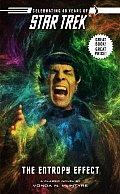
The Entropy Effect by Vonda McIntyre
http://www.powells.com/biblio/1-9781416524649-2

The Entropy Effect is a Star Trek novel by Vonda McIntyre. Every so often, I take a trip to a used bookstore and hunt for books I haven't read by my favorite authors, and that's how I found this one.
In this story, scientist Dr. Georges Mordreaux starts a chain of events leading to Armageddon when he sends his friends back in time. Spock goes back in time to chase Mordreaux down and stop him. Unfortunately, he only stops an older version of Mordreaux from stopping a younger version of Mordreaux. After that, it gets complicated and exciting as Spock and the older Mordreaux keeps trying and failing.

McIntyre takes the opportunity to explore the inner lives of the Star Trek characters, putting them in situations you'd never see in the show, and bringing in characters with more diverse shapes and sizes. I especially liked her portrayal of the junior officers who are trying so hard to impress Captain Kirk and prove themselves on the job.

What took this novel above and beyond for me was McIntyre's exploration of consciousness. If you are a character in one time stream, and somebody goes back and changes it, a person with your name and body and personality will still exist, but the "you" that you were has ceased to exist - or has it?
In other words, would you just vanish, losing all your experiences - in effect, experiencing death? Or does some part of your altered consciousness remain? This book is the first time I've ever seen that question explored.

The Gideon Trilogy: Gideon the Cutpurse, The Time Thief, and Time Quake by Linda Buckley-Archer
http://en.wikipedia.org/wiki/Gideon_the_Cutpurse

Two children, Kate and Peter, are thrown back into 18th century London when a scientist's anti-gravity invention turns out to be a time machine. The children are scared and want to go home, and Peter has unfinished business because he has just told his father "I hate you!" The children make a pact not to separate, but they are torn apart all the same. Worse, the machine has unexpected properties. Kate starts "blurring" -- making brief appearances in the present time before being suddenly thrown back. She also "fast forwards," moving so fast that everyone else seems like statues and not knowing whether she'll ever return to the proper speed.

Worst of all, it turns out that each time travel event creates a parallel universe. Each parallel universe has its own time travel events, which means that the number of parallel universes multiplies exponentially. Time travel thus becomes Armageddon.

In the middle of all this excitement, three characters from the Victorian underground act out their own dramas. Gideon the Cutpurse, a pickpocket, helps Kate and Peter. The Tar Man, a horrifically scary criminal, steals the time machine and rampages through present-day London. Meanwhile, Lord Luxon, the only irredeemable character, engineers the assassination of George Washington just as he is about to cross the Delaware.

This trilogy, like McIntyre's novel, asks the question of what happens to your consciousness when time is reset.


Kristin King is a writer, parent, and activist who lives in Seattle. Her work has appeared in Strange Horizons, Calyx, The Pushcart Prize XXII (1998), and other places. Now that her youngest child is in kindergarten, she is contemplating a mid-life nap.

Wednesday, December 21, 2011

The Pleasures of Reading, Viewing, and Listening in 2011, part 16: Nisi Shawl

Dropping My Jaw, Warming My Heart
by Nisi Shawl

Most of what I’ve read in 2011 I can’t talk about. Or else I’ve talked about it already. I still review books for The Seattle Times, and occasionally for Ms. Magazine, too. A quick search will bring to light my takes of China Miéville’s Embassytown, Joan Aiken’s collection The Monkey’s Wedding, and other worthwhile engrossments (my favorite of the Times books was Mat Johnson’s Pym, and I explain why here).

This year I also serve as a Tiptree judge. Top, top secret what I think of the nominees. Not saying a word. Yet.

Editing gigs have given me some interesting reading material, too, and about that stuff I can and will share my opinions.

I’ve seen some stellar reviews of books in my capacity as reviews editor for The Cascadia Subduction Zone, Aqueduct Press’s new literary quarterly. Victoria E. Garcia wrote two of the best: one on 80!, the Ursula K. Le Guin festschrift, in which she didn’t even mention my essay, and still so enjoyably analyzed the book’s effect that I just didn’t freakin care; the other an artless idolization of Geoff Ryman’s collection Paradise Tales. I also derived deep delight from Ursula K. Le Guin’s retrospective on Vonda N. McIntyre’s Dreamsnake. Another excellent CSZ piece I read even though I didn’t have to, was Steven Shaviro’s “Hyperbolic Futures;” it makes certain scary capitalist abstractions palpable, funny, and potentially deflatable--what you understand, you can consciously engage with.

MJ Hardman’s essay “The Russ Categories,” which I had the privilege of including in the volume of the WisCon Chronicles I edited, is by far my favorite text of the entire year. Audacious, clear, challenging, rewarding: it was truly Nisibait of the highest order. Drop my jaw and you win my heart, and MJ did this for practically her entire 9000 words.

Musically speaking, my 21-year-old niece Brittany Johnson has led to some of my most pleasurable recent listening discoveries. 2011 saw my whole family getting in on the act when I spent three weeks in my Midwestern hometown, driving kids to school and the Y. The van’s sound system recycled two CDs by a band combining intricate hiphop lyrical play with Beatlesesque harmony and production values: N.E.R.D. “Happy,” my top choice for best N.E.R.D. groove, has no official video, so check out the conflation of romantic love with stock speculation in ”Sooner or Later”.

By far the most engaging viewing experience for me in 2011 has been watching the hundreds of responses to and parodies of Republican presidential candidate Rick Perry’s “Strong” campaign ad. The original 31-second TV commercial has nearly 700,000 dislikes as of this writing, in the mere two weeks since it was first posted on YouTube.

The first wave of responses to “Strong” consisted primarily of people recording themselves as they watched the ad, their faces showing a mixture of confusion, disbelief, and disgust. Later responses became more polished and often featured costumes, props, and settings along with scripts. But that’s simplifying things a bit: search on “Rick Perry Strong,” perhaps adding filters for “commercial,” “response,” “spoof,” and “parody,” and you’ll find reactions ranging from incoherent to obscene to calculated to sincere--along more than two axes--and produced by queers, atheists, straights, soldiers, teachers, high schoolers, and comedians. Here are some of my favorites:

Two Christian sisters quoting a well-known hymn in rebuttal to Perry’s homophobia
Perry’s spot intermixed with a trailer from the movie Brokeback Mountain
Lesbian activist whose incredibly expressive face pretty much says it all
Raunchy and highly articulate speech by a self-proclaimed “butt pirate”
Presumably deaf lesbian signs her disapproval of Rick Perry’s message
Lovers in Santa hats provide silent commentary on the original commercial
The elegantly simple response of replacing Perry’s head with an ass and his speech with farts

There were also quite a few recordings of people playing first-person shooters while describing how utterly stupid they found “Strong.” One fellow who referred to his enemies in the game as “faggots” and women as “bitches” was still offended by the ad. He admitted to being “10% homophobic,” but declared that Perry had gone overboard. “If I’m getting shot at and you’re carrying me to safety, I’m not going to make you put me down because of your sexual orientation,” he scoffed.

I can’t find the URL for the absolute best of these responses, which consisted merely of three young men standing around together and mocking Perry on their lunch break, showing how casual contempt for him has become.

Perry didn’t have much chance of being nominated by the GOP, much less elected President. Now he has none, because he actually alienated many of the voters he was trying to win with this particularly vicious ploy. Over and over, negative responses to “Strong” remarked that he was attacking our troops. In the minds of hundreds of thousands of voters, the fact that men and women were voluntarily laying their lives on the line in an effort to protect US freedoms easily trumped any discomfort about their bedroom practices. Soldiers are more highly valued than politicians. Even, or maybe especially, among conservatives.

This is why I spent hour after hour watching these things; this is what I found so heartening about them: that such a self-serving manipulator could be so wrong about what and who people are ready to believe.

Also, they made me laugh.


Nisi Shawl is the author of Filter House, which won the James Tiptree Jr. Award and was nominated for the World Fantasy Award, Something More and More, her WisCon GoH collection, and, with Cynthia Ward, the co-author of the celebrated Writing the Other: A Practical Approach, and the editor of The WisCon Chronicles, Vol. 5: Writing and Racial Identity, all of which are published by Aqueduct Press. She reviews science fiction for the Seattle Times, is a member of the Clarion West board, teaches writing workshops at Centrum in Port Townsend, WA., and is the reviews editor of The Cascadia Subduction Zone. She was also last year's Guest of Honor at WisCon.

Tuesday, December 20, 2011

The Pleasures of Reading, Viewing, and Listening in 2011, part 15: Jeffrey Ford

Books, Movies, and Music Enjoyed in 2011
by Jeffrey Ford


Read

The New Jim Crow: Mass Incarceration in the Age of Colorblindness by Michelle Alexander (The New Press) -- Alexander offers a supremely well-researched and ultimately convincing argument that the out of control incarceration of young Black males constitutes a new kind of Jim Crow law and resultant caste system. Interesting discussion of how this phenomenon is aimed at blocking and/or disenfranchising people from their vote.

Doctor Sleep by Madison Smartt Bell (Grove Press). An Americn ex-heroin addict, self-styled hypnotherapist, who works with a secret government agency at times and lives in London, suffers from insomnia. A trippy book in which the reader is never quite sure what's happening. Errant and subtle. Terrific writing.

The Natural History of the Unicorn by Chris Lavers (Harper Perrenial). Across continents and centuries, Lavers traces the history of a myth. Interesting stories from antiquity to the 19th century concerning this symbolic creature.

Wave of Mutilation by Doug Lain (Eraserhead Press/Fantastic Planet). The universe has a hole in it and reality is leaking out. Who knew it would be this much fun? Doug Lain's Wave of Mutilation is the story of Christian and Samantha; a story that generates itself as it devours itself. Its characters and surreal scenes are rendered with an engaging style and seem to have truths to tell us about relationships, politics, sex, the history of furniture. At the same time, they convince us they are insubstantial, errant, nothing but the illusion of the world. Terrific writing, good laughs, and the flawless execution of a fictional tightrope walk between "reality" and nothing. Wonderfully original!

The Hundred Thousand Kingdoms, The Broken Kingdom, The Kingdom of Gods by N. K. Jemisin (trilogy from Orbit Books) -- A fascinating and original take on the genre of epic fantasy by a writer who can do it all. This is a lot of epic fantasy for me (not so much an epic fantasy reader). I was constantly engaged, delighted, and surprised by these works. Looking forward to see what Jemisin does next.

Matilda Told Such Dreadful Lies: The Essential Lucy Sussex by Lucy Sussex (Ticonderoga Press) -- A retrospective collection from one of my favorite contemporary short story writers. Eclectic themes (SF, F, H, Mystery)) and styles -- creepy dolls, genetics of the snake woman, volcanoes. Sussex is an underappreciated story writer. It's great to see this new compilation of some of her best work.

R/Evolution by Tenea Johnson (Counterpoise) -- A mosaic novel. Fast paced science fiction full of ideas from a time and place where bio-technology and racial justice/injustice coincide. Nice blend of the fictional page turner and important political ideas. Also check out Johnson's new Smoketown novel from Blind Side Press.

Starve Better by Nick Mamatas (Apex Publications) -- Advice on the writing life is usually for shit, but Mamatas manages a clear headed, realistic, and humorous view of what to expect and offers credible tips on making the most of your fiction in the world of professional writing. There are few books like this that I'll recommend to my fiction students, but this is definitely one of them.

The Camel by Robert Irwin (Reaktion Books) -- Everything you might want to know about the mythology, history, and biology of the camel by an interesting author.

This year I've been lucky enough to read some books that won't be out till 2012. You might want to consider these in the new year.

The New American Crime Film by Matthew Sorrento (McFarland Publishers) -- Forward by director, Stuart Gordon. Sorrento covers the crime films of Lynch, Cronenberg, Mamet, Herzog, etc. A little pricey, but a scholarly work that is more than just gossip and glitz.

Moscow But Dreaming by Ekaterina Sedia (Prime Books) -- this new collection of stories by Sedia contains weird and twisted tales from old Russia, the Soviet system and America. Sedia's writing is alive with metaphor that renders both the beautiful and the bizarre. Her yellow Lenin is the height of creepiness. I can't recommend this one enough. Sure to be one of the stand out collections of 2012.

Technicolor and other Revelations by John Langan -- Langan, one of the best short story writers in the Horror genre, takes the archetypal themes of horror and filters them through his unique imagination and style, making them entirely fresh. Contains the classic "How the Day Runs Down" from the JJ Adams anthology, The Living Dead, plus seven other pieces, one a new story. Great book of short fiction.

Viewed

Kiss Me Deadly directed by Robert Aldrich, starring Ralph Meeker as Mike Hammer, written by A. I. Bezzirides and Mickey Spillane (1955) -- Sort of an SF/Noir with espionage intrigue, a box of glowing bad stuff, and a loopy plot. Cloris Leachman debuts. Criterion Collection.

House of Numbers directed by Russell Rouse, starring Jack Palance and Barbara Lang, based on a novel by Jack Finney and a script by Don Mankiewicz (1957). Palance plays twins in this prison break caper. The scheme that Arnie and Bill Judlow put into play is preposterous, but somehow the story works. Shot at San Quentin, using real guards and prisoners as actors. The Chief, from Get Smart, plays the warden of the joint.

Two Lane Blacktop directed by Monte Hellman, starring James Taylor, Laurie Bird, Dennis Wilson (of the Beach Boys) and the great, Warren Oates, screenplay by Rudy Wurlitzer and Will Cory (1971). Ran into this late one night on, I believe, TCM. Apparently the film had been out of circulation for a long time. About a race from somewhere in the Southwest to Washington D.C. The prize is that the winner gets the loser's car. No frills movie making -- errant and at times beautifully slow. Wurlitzer plays a race car driver and a young Harry Dean Stanton plays a hitch hiker.

Listened


The Goat Rodeo Sessions by Yoyo Ma, Stuart Duncan, Edgar Meyer, and Chris Thile.

"Just You, Just Me" by Pianica Maeda

Rough Guide to African Guitar Legends anthology

Ska Down Her Way anthology

For Your Love" by Ed Townsend


Jeffrey Ford, who has the won the Nebula Award, the World Fantasy Award (several times), and a few other awards as well, is the author of The Well Built City trilogy and numerous other novels, as well as several collections of short fiction. He lives in New Jersey.

Monday, December 19, 2011

The Pleasures of Reading, Viewing, and Listening in 2011, part 14: Fiona Lehn

2011, On the Couch
by Fiona Lehn

I spent nearly half of 2011 on the couch with my foot up, having broken my ankle while hiking the beautiful (but harrowingly treacherous) Mt. Seymour in the summer. A good friend who understands these things brought me her entire 5-season series of Babylon 5 on dvd. Avoiding tv (besides the Canucks and the Broncos) for the past 25-ish years has rendered me somewhat culturally ignorant; thus, I had never heard of Babylon 5. But now…I know my Minbari from my Psi Corps and everyone in between. This is a fascinating saga that starts out slow (the first season required concerted investment even while on painkillers that made everything warm and fuzzy) and evolves into an epic space opera that ended all too soon.

Glee (season 2, dvd). I’m a Gleek. I admit it. I have always loved musicals and I LOVE Glee! I believe that if everyone broke out into dance and/or song in our daily lives, the world would be a much healthier place. Season 2 dials down the OTT style of the first season and cranks up the higher love.

Dead Like Me (seasons 1 and 2, dvd). I discovered this show early in 2011 while babysitting a friend’s kid who had long since fallen asleep. I love the tone of this show, the wit, and the characters. Dark and philosophical, it seems to be a show for depressed people. (Reminds me of early 1900s Russian literature. Ok, maybe not that dark!)

Torchwood (all of them, dvd). Is everyone on this show sexy, or is it just me? Great acting, thrilling plots, everything you could ever ask for from science fiction. Yummy.

The Runaways (dvd). I remember when Joan Jett came out with “I Love Rock N’ Roll” and hit Number 1 with it, but I didn’t know her earlier band, The Runaways, at all. I watched this dvd during my “lie on couch with ankle up” tenure and was blown away by the spirit and the talent of the young female musicians, by their drive, their mistakes, their passion—what a fabulous film for the inner rockstar in everyone!

The visual artwork of Geneviève Pratte and Suzanne Lorenz.I first discovered Pratte, a young, award-winning Montréal-based painter, while editing an issue of Room magazine. I fell in love with her sometimes desolate and almost apocalyptic work, represented by Galerie Lamaoureux Ritzenhoff.
Northern Californian photographer Suzanne Lorenz has photographed the dying oak trees and other native beauties that have become quite rare in the San Joaquin Valley, (once one of the most fertile farm valleys of the world, now much built over as bedroom communities for the San Francisco Bay Area). The Light of Change showcases much of her work.

Pink: “Raise Your Glass” (official music video). Long ago, Pink earned my fandom. Tough, smart, compassionate, talented, she likes to push envelopes (remember her video “Stupid Girls”?) and does it well. In her video for “Raise Your Glass”, Pink raises the bar with irreverence, and celebrates all of us—just watch it!

OK GO: “This Too Shall Pass” (official music video). Never seen an OK GO video? Change that. You won’t regret it. This creative, colourful and witty band writes groovy music with uplifting lyrics and makes high-quality one-take videos that boggle the mind. This particular video features a marching band in marshland camouflage and a children’s choir. It’s hilarious, somehow Dr. Seussical, and the music rocks.

Megan Slankard: A Token of the Wreckage (independent cd). This debut album by a young songwriter from Northern California resembles Jonatha Brooke at times. High production values, layered vocal harmonies, thoughtful lyrics and smooth arrangements —reminds me how good songs can be.

Dan Ariely: The Upside of Irrationality (nonfiction). Although I haven’t yet finished this book, it has already changed the way I think about people’s behaviour. I used to believe that just a few people behaved irrationally, but now I agree with Ariely: pretty much everyone does. A good-natured and pragmatic study of why people do what they do, and how their irrational responses make sense.

Connie Willis: To Say Nothing of the Dog (science fiction). I became a Connie Willis fan a few years ago when I read Lincoln’s Dreams. Despite several attempts, however, I had trouble getting into To Say Nothing of The Dog until I was going in for surgery on my ankle and grabbed the thickest book I had yet to read from my bookcase. Somehow the desperation I was feeling while wondering if I’d walk again and waiting for the operating room to open up, helped me to leap into this time travel story that, turns out, is hilarious. Ask yourself one question: How much trouble can one little cat cause? Read and find out…

I have a few all-time faves that must be mentioned:

Stanislaw Soyka, Poland’s songwriter, and Francis Cabrel, France’s songwriter—that’s what I call them anyway. Whenever I meet someone from Poland or France, inevitably, I ask if they have seen their respective country’s songwriter live, what they think of the music, etc. Both are poets and fabulous musicians. If you love good music and don’t necessarily need to understand all the words, try them (and pick up a couple new languages at the same time).

Joanna Russ: Picnic on Paradise (science fiction). I love it, have always loved it, and always will. Russ’s anachronistic little heroine kicks ass from start to finish in a barbaric future universe, and leaves the reader wanting more.

Suzy McKee Charnas: “Listening to Brahms” (novella). McKee Charnas’ narrator in this story becomes emotionally numb after experiencing a cataclysmic trauma. When I first read this novella, I had to read it again. Many times. It sparked something in me. I became fascinated by the idea of a character who had been programmed to feel nothing, and what happens to her eventually became the story of my first novella, “The Assignment of Runner ETI”. Can people reacquire their humanity once it vanishes? And if so, how? McKee Charnas’ story is a chilling account of the end of the world as we know it. Set on a planet run by lizards. Told with a dark humour, and no hope at all. (You’ll love it!)

I look forward to walking again, and to the many artistic treasures 2012 will bring. Until then, enjoy!


Fiona Lehn made her first professional sale of fiction in 2008 when “The Assignment of Runner ETI” won third place in the Writers of the Future contest. From 1993 to 2006, she co-produced several CDs of her original songs and performed across the U.S. From 2007 to 2011, Lehn served on the editorial collective of Room, Canada's oldest feminist literary magazine. Though Lehn grew up in Stockton, CA and is a graduate of the University of California at Santa Cruz, she lives now in Vancouver, BC as a Canadian citizen. Aqueduct Press published her novella The Last Letter as a volume in its Conversation Pieces series in 2011.